My Science Glossary
My Science Glossary
Hi, my name's Moncef and I have been a student at Montmorency's cegep for about a year and a half, and I have one term left so let's hope I make it. I believe that to really succeed in my department (Sciences) you have to be diligent in your work and your studying which, to be honest, is not an easy task. Let's say we learn everything that is science related for our level like from math, chemistry, physics, biology, etc so that we have the fundamentals in every subject. The workload is something quite surprising compared to what everyone's used to from secondary school. Nevertheless, it's doable and can even be enjoyable, thanks in part to help from friends. For me, I'd say that it's in between since I do have friends to keep me company and kind of keep me away from constant stress, but that doesn't change the fact that for me it's a bit more difficult. That is because I have work and sports on the side, and I would also like to go to sleep early this semester so balancing all that is quite the task. I've chosen the words of this glossary with the help of the internet and my classes since pretty much every word here is mentioned in at least one of my classes, so it wasn't really difficult to find them. It' a different story for the definition on here because I used the internet a lot more. I wish you a great learning experience of my field of study through words that hold important place in my field. Enjoy!
- acid
- adjective/noun
- Containing acid or having the properties of an acid; having a pH of less than 7.
- Example: Protons released by the acid react with the ionized form of the buffer, A-, neutralizing them whilst OH- ions react with the undissociated buffer, HA.
- en: acide

- atom
- noun
- An atom is the fundamental building block of matter, representing the smallest unit of a chemical element.
- Example: The carbonyl moiety associates to the central metal species via the carbon ATOM of the group.
- en: atome

- base
- adjective/noun
- A substance capable of reacting with an acid to form a salt and water, or (more broadly) of accepting or neutralizing hydrogen ions.
- Example: Indicators are also very weak acids or bases and react with added acid or base if no other base or acid is present in a solution.
- en: base

- cell
- noun
- In biology, the smallest unit that can live on its own and that makes up all living organisms and the tissues of the body.
- Example: In the current picture of the origin of the eukaryotic CELL, the mitochondrion was a "lucky accident" (Vogel 1998).
- en: cellule

- chromosome
- noun
- A threadlike structure of nucleic acids and protein found in the nucleus of most living cells, carrying genetic information in the form of genes.
- Example: For the tumor to occur, a nonsense or frameshift mutation in the gene gives rise to a truncated protein, non disjunction may occur in a second mutation leading to the loss of chromosome 13.
- en: chromosome

- ecosystem
- noun
- An ecosystem is a functional unit where all the living organisms (biotic factors), such as plants, animals, and microorganisms, interact with each other and their non-living physical environment (abiotic factors), including soil, water, air, and sunlight, within a specific area.
- Example: Increasing labour cost has led to promote the use of insecticide and herbicide which adversely resulted in the disruption on ecosystem and the increased risk to human health and environmental pollution.
- en: écosystème

- energy
- noun
- The fundamental property of a physical system that is transferred between objects or systems when work is done, resulting in a change.
- Example: They take electrons from food molecules extract the ENERGY and combine them to oxygen and protons.
- en: énergie

- eukaryote
- noun
- An organism consisting of a cell or cells in which the genetic material is DNA in the form of chromosomes contained within a distinct nucleus. Eukaryotes include all living organisms other than the eubacteria and archaebacteria.
- Example: For mitochondrial like bacteria to evolve and form symbiotic relationships with other cells, there needed to be oxygen present in the atmosphere for bacteria to evolve within, before the modern eukaryote could engulf them.
- en: eucaryote
- evolution
- noun
- The process by which animals, plants, and other living organisms are transformed into different forms by the accumulation of changes over successive generations.
- Example: Therefore, if sexual reproduction is just random mating between individuals, it cannot be the only force leading to EVOLUTION.
- en: évolution
- force
- noun
- Strength or energy as an attribute of physical action or movement.
- Example: During the simulations the atoms move and vibrate due the interactions and thermal energy in the defined force field and within the given constraints, throughout all the simulations the temperature was assumed to be 323K, which is roughly human body temperature.
- en: force

- friction
- noun
- The resistance that one surface or object encounters when moving over another.
- Example: The layer of fluid in contact with the surface of the disks is carried by it due to FRICTION, and thrown outwards by centrifugal forces.
- en: friction

- gravity
- noun
- The force that attracts a body toward the center of the earth, or toward any other physical body having mass.
- Example: To determine the Required Force, the mass of the object to be moved, the direction of motion relative to GRAVITY, and the effects of any friction between the object to be moved and whatever is supporting it should be known.
- en: gravité

- magnetism
- noun
- A physical phenomenon produced by the motion of electric charge, resulting in attractive and repulsive forces between objects.
- Example: The reduction of electricity and magnetism to one force governed by a few equations in Maxwell's theory of electromagnetism is in stark contrast to the many variables and interpretations required in astrology to predict aspects of human behaviour.
- en: magnétisme

- matter
- noun
- Physical substance in general, as distinct from mind and spirit; (in physics) that which occupies space and possesses rest mass, especially as distinct from energy.
- Example: The core consists of terrigenous sediments and organic matter, accumulated at a rate of around a few millimeters a century (Aitken 1990), therefore a core of ten meters in length, as is the norm, will cover a period of several thousand years.
- en: matière

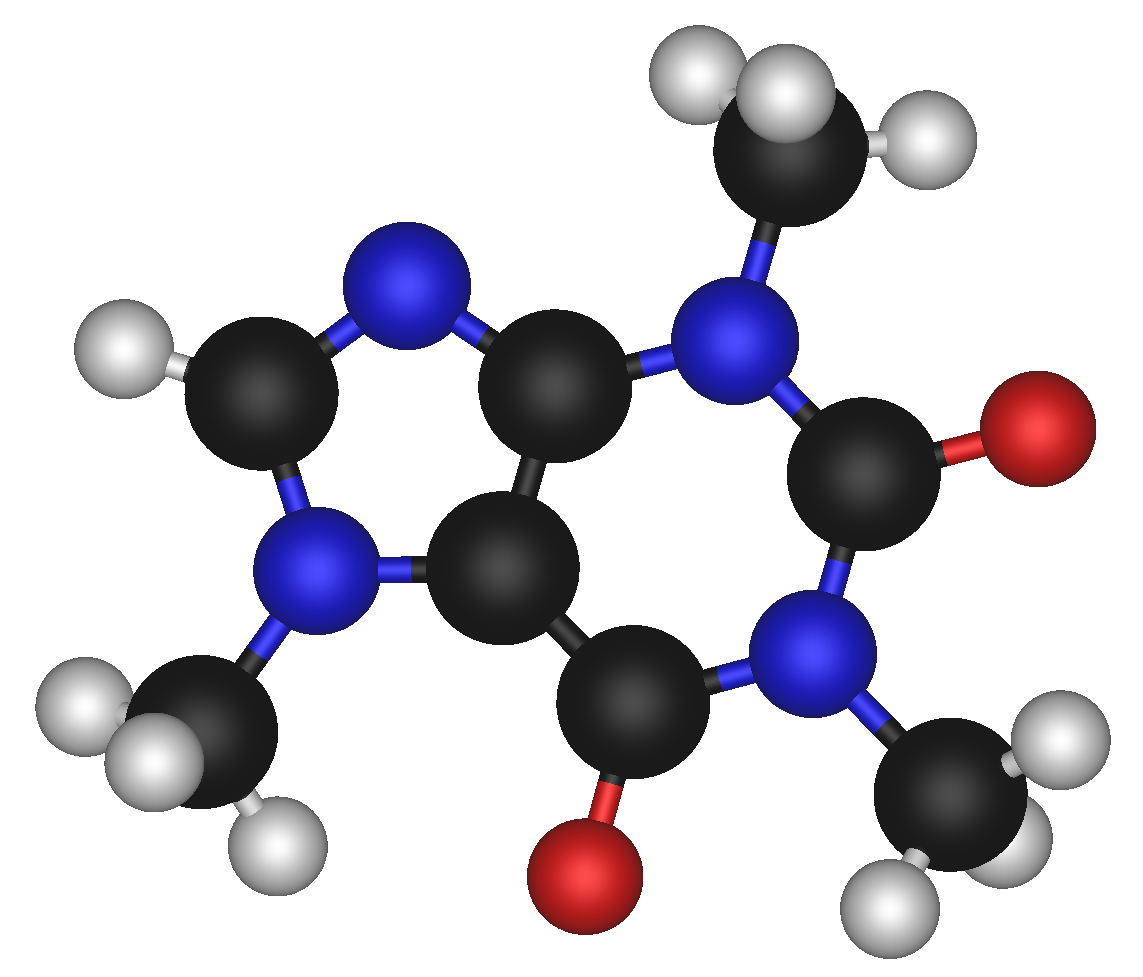
- molecule
- noun
- A group of atoms bonded together, representing the smallest fundamental unit of a chemical compound that can take part in a chemical reaction.
- Example: The estrogen molecule, being small and lipophilic, is able to diffuse in to the cell and bind to the estrogen receptor.
- en: molécule
- neuron
- noun
- A specialized cell transmitting nerve impulses; a nerve cell.
- Example: The neurotransmitter molecules then diffuse across the synaptic gap where they can bind with receptor sites on the postsynaptic ending using a lock and key mechanism, to influence the electrical response in the postsynaptic neuron.
- en: neurone

- nucleus
- noun
- The positively charged central core of an atom, consisting of protons and neutrons and containing nearly all its mass.
- Example: A protist is thought to be the cell the bacteria were engulfed by, it is an intermediate cell between prokaryote and eukaryote with no organelles except from a membrane bound nucleus.
- en: noyau

- orbit
- noun
- The curved path of a celestial object or spacecraft around a star, planet, or moon, especially a periodic elliptical revolution.
- Example: This is the effect seen as the Earth orbit's the Sun whereby a star seems to change its position relative to distant background stars.
- en: orbite

- organ
- noun
- A part of an organism that is typically self-contained and has a specific vital function, such as the heart or liver in humans.
- Example: However, fat tissue also store at other parts of body, like the thigh, the trunk and surround the internal organ.
- en: organe

- organism
- noun
- An individual animal, plant, or single-celled life form.
- Example: The shell is the first line of defense against a predator, whether and animal or a microscopic ORGANISM.
- en: organisme

- periodic table
- noun
- A table of the chemical elements arranged in order of atomic number, usually in rows, so that elements with similar atomic structure (and hence similar chemical properties) appear in vertical columns.
- Example: However, the Bohr model has clearly been a success; it has given us the periodic table among other things.
- en: tableau périodique

- photosynthesis
- noun
- The process by which green plants and some other organisms use sunlight to synthesize foods from carbon dioxide and water.
- Example: The intercellular air spaces are so that gaseous exchange can take place- carbon dioxide in, and oxygen out for photosynthesis.
- en: photosynthèse

- temperature
- noun
- The degree or intensity of heat present in a substance or object, especially as expressed according to a comparative scale and shown by a thermometer or perceived by touch.
- Example: A drop in temperature, e.g. in adverse weather conditions will result in her energy requirements increasing, with her body reserves being the most important source of this energy.
- en: température
- velocity
- noun
- The speed of something in a given direction.
- Example: This allows the mechanism to be evaluated for any crank angle, velocity, acceleration or force by changing the initial input values.
- en: vélocité

Great read! I'm sure your post will be helpful for those in your field.
ReplyDelete